Why begin with sugar and people?
A rum history that focuses only on ships, barrels and celebrated names leaves out the people whose labour made the colonial economy possible. The relationship between sugar, rum and enslavement is a necessary part of the subject. The museum The Rum Story introduces that connection.
When reading a historical account, ask whose experience is being described and who is absent. A technical explanation of a process answers a different question from an account of the conditions under which people worked. Both matter, and one should not replace the other.
How can an Antigua heritage visit add context?
The Antigua Naval Dockyard and Related Archaeological Sites provides a local connection to this wider history. UNESCO explains the contribution of enslaved Africans to the naval complex and its relationship to the protection of sugar-producing interests. Read the World Heritage account.
That does not make every nearby activity a historic rum-production site. It offers a reason to approach the English Harbour area with curiosity about labour, power, trade and place. Our English Harbour guide helps you plan a heritage visit separately from a modern class.
Can rum's story be reduced to one origin claim?
Treat neat claims about a single inventor or undisputed birthplace with care. Different sources may be describing an early written record, a production tradition or a modern national identity. Those are not automatically the same historical claim.
A useful beginner approach is to focus on what a source actually establishes and acknowledge the limits. You can appreciate a regional tradition without declaring that it explains all rum. Our Caribbean rum guide uses production questions to explore the diversity rather than forcing every bottle into one simplified story.
How should culture enter the conversation?
Look for specific people, practices and places rather than treating “Caribbean culture” as a single decoration. Ask how skills are learned, how a product is described locally and how a tradition is understood by the people involved. Avoid assuming that a souvenir or a tourist description represents every community on an island.
A specific example is the knowledge of Cuba's light rum masters. UNESCO describes a tradition combining scientific and practical knowledge, an ethical code and learning passed between generations. Its account of the Cuban rum masters shows why cultural knowledge involves people and transmission, as well as a finished drink.
For visitors, respectful curiosity is practical: read museum interpretation, ask clear questions and distinguish a source's evidence from attractive storytelling. A tasting can open a conversation, but it cannot stand in for the whole history of a region.
What does the Academy teach during the experience?
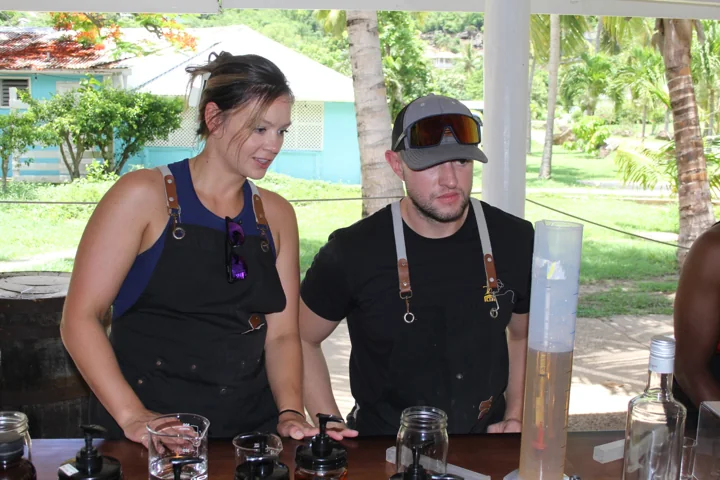
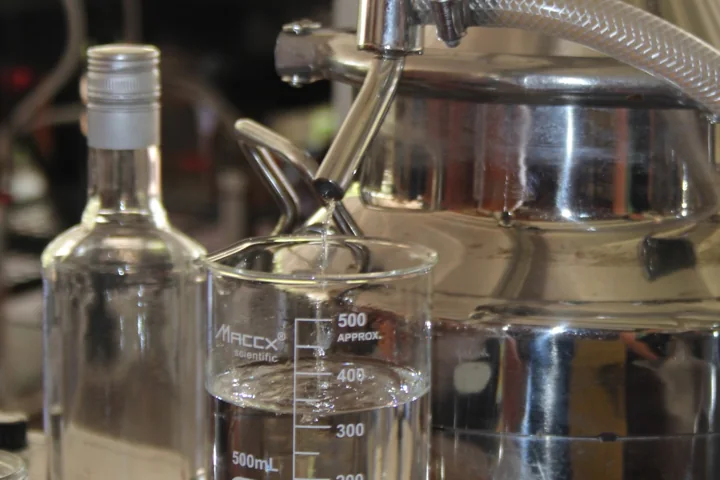
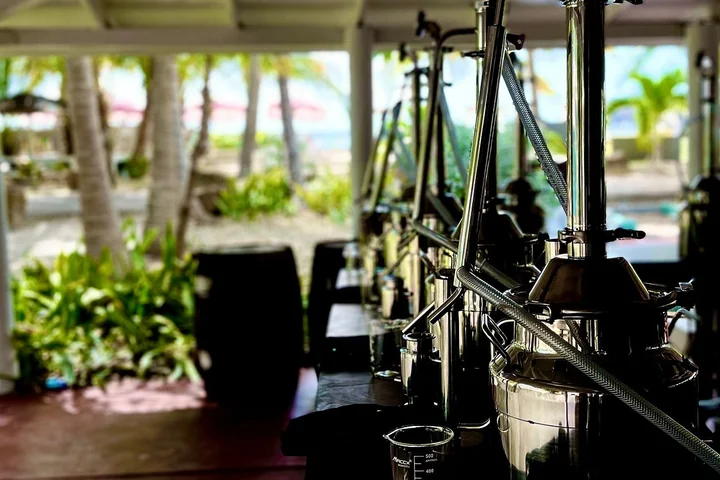
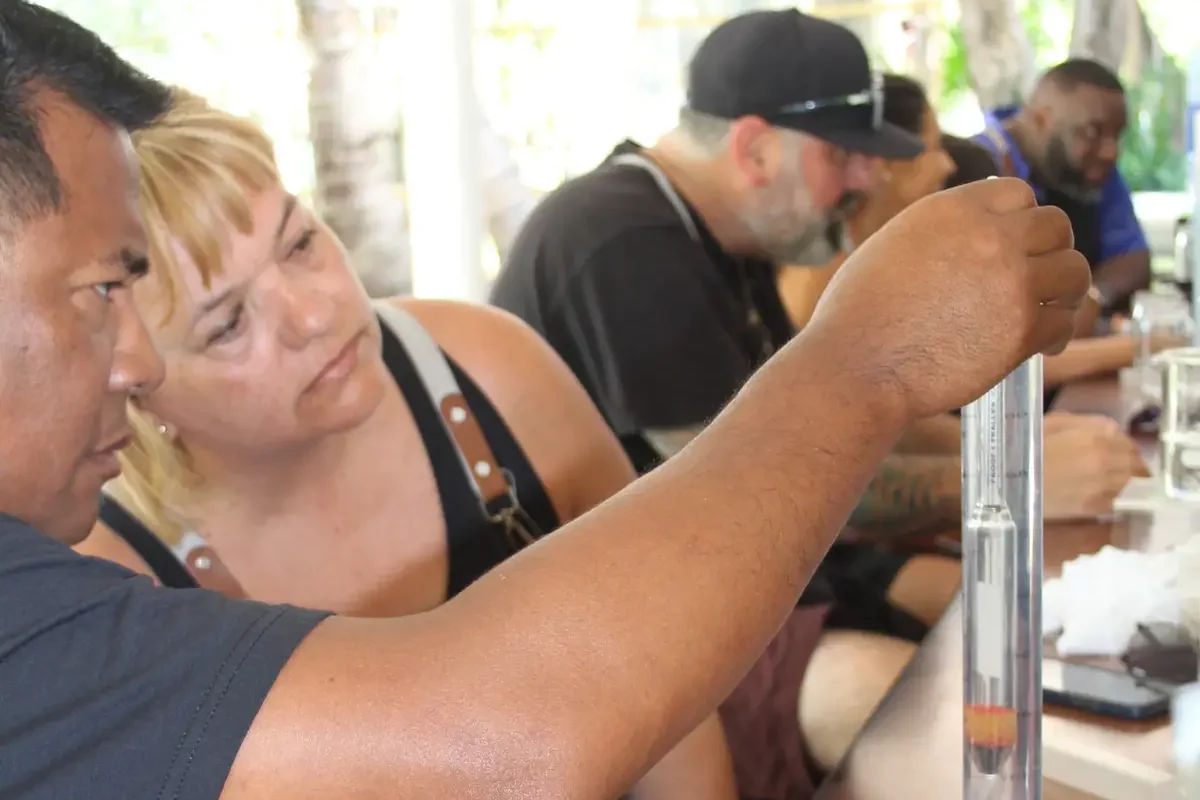
The Academy's session includes a brief introduction to historical rum making in the Caribbean before the guided creative stages. Guests then choose flavours, mix, test and finish their own bottle with instructor assistance. See the published experience sequence.
A modern Academy class pairs a brief historical introduction with practical tasting and rum creation. Read about one aspect that interests you beforehand, such as sugar, maritime trade or the people whose labour shaped the Caribbean economy. Bring a thoughtful question to the session and use the linked historical sources to continue exploring after your visit.
Published by Academy of Rum Antigua, an interactive rum education and blending experience at Galleon Beach. External references are linked beside the information they support. For current bookings and operational details, use the experience, pricing and visit information pages.
Galleon Beach · Antigua
Experience rum differently.
Taste, learn and create your own rum at our Antigua mini distillery, with guidance from your first flavour choice to your finished bottle.
18+ to drink. Please enjoy responsibly.