What happens before there is a spirit?
The starting material provides fermentable sugar. Yeast converts sugars into alcohol during fermentation; this stage also contributes aroma compounds. A producer can begin with molasses or another sugarcane-derived material, including fresh cane juice. WIRSPA explains the production sequence.
Think of the starting material and fermentation as separate questions. Knowing that two rums use molasses does not tell you that they will taste alike. To compare them, you would still want to know how they were produced and what happened afterwards. Our raw-material comparison explains why the ingredient is a starting point rather than a complete flavour prediction.
What does distillation do?
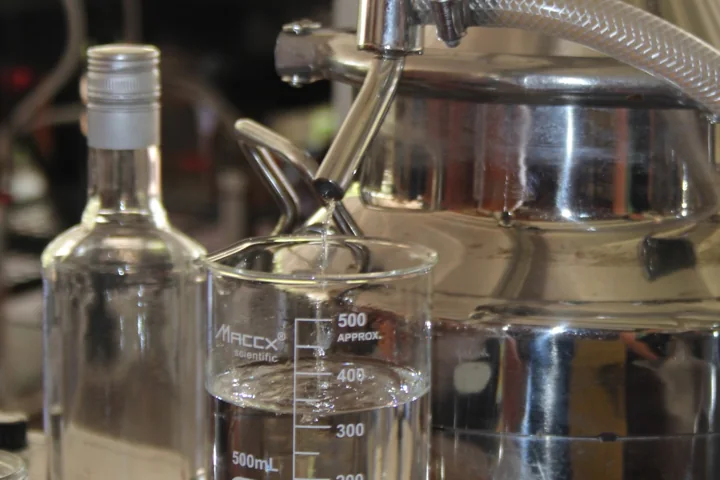
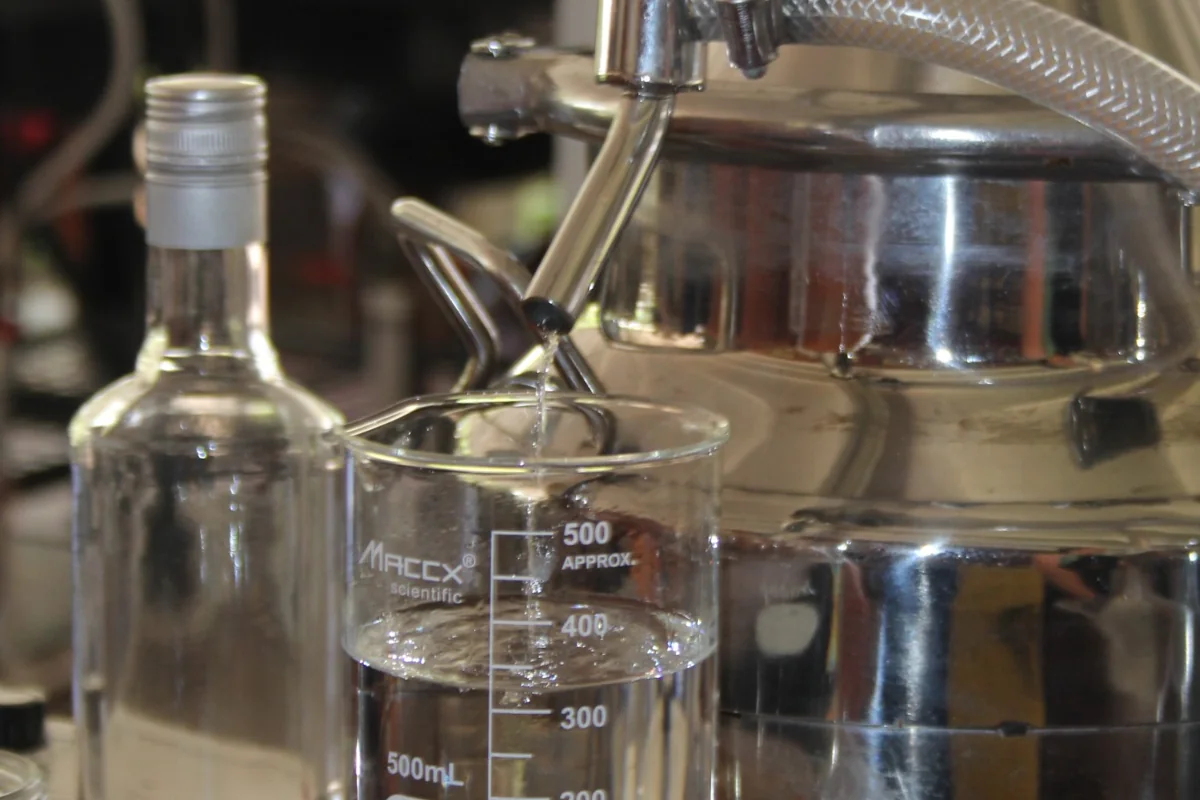
Distillation separates and concentrates alcohol and other volatile components from the fermented liquid. Pot and column stills are different production tools, and the producer's choices help shape the resulting spirit. This is distinct from blending, which combines existing components. See WIRSPA's production overview.
For a visitor, the useful distinction is the purpose of the stage. Fermentation creates alcohol; distillation produces a concentrated spirit; blending assembles a desired result. Seeing a still in a classroom should not lead you to assume a short session completes an entire commercial production cycle.
Does all rum spend years in a barrel?
No. Rum can be unaged or aged, and appearance alone does not reliably reveal which. Some aged rums are filtered to remove colour. WSET explains why colour can mislead.
Ask what a producer actually says about maturation instead of treating the darkest bottle as the oldest. Our aging guide covers the questions that make an age statement more useful, while the white, gold and dark rum comparison separates appearance from assumptions about flavour.
Where does blending fit into the process?
Blending combines components to create a chosen character. A blender can compare the parts, adjust their relationship and assess the result. It is a decision-making stage, not another name for fermentation or distillation.
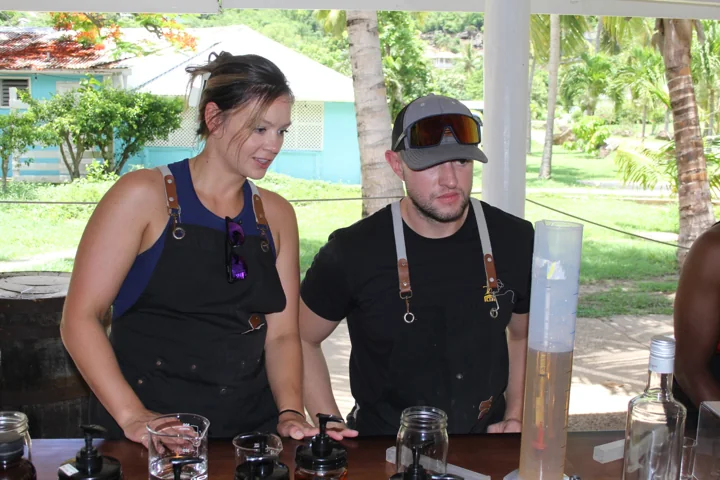
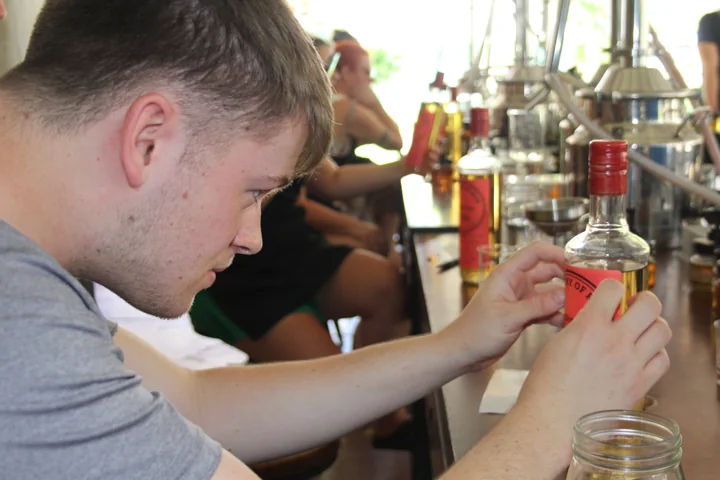
That distinction helps when reading experience descriptions. “Make your own” can refer to a guest's creative participation in a guided class, rather than starting with raw sugarcane. At the Academy, the published session sequence explains what you actually do: taste, learn, choose flavours, mix, test and finish a bottle with guidance.
Which rum terms are worth remembering?
| Term | Plain-language meaning |
|---|---|
| Fermentation | Yeast converts sugars into alcohol |
| Distillation | Separating and concentrating volatile components from a fermented liquid |
| Maturation | A period of development, often involving a wooden cask |
| Blending | Combining components to reach a chosen character |
| ABV | Alcohol by volume: the proportion of a liquid's volume that is alcohol |
You do not need a technical vocabulary before joining the Academy. These terms simply help you ask more precise questions. Understanding which step you are discussing is more useful than memorising a production diagram without connecting it to the rum in your glass.
Published by Academy of Rum Antigua, an interactive rum education and blending experience at Galleon Beach. External references are linked beside the information they support. For current bookings and operational details, use the experience, pricing and visit information pages.
Galleon Beach · Antigua
Experience rum differently.
Taste, learn and create your own rum at our Antigua mini distillery, with guidance from your first flavour choice to your finished bottle.
18+ to drink. Please enjoy responsibly.